
The Five-Minute Presentation
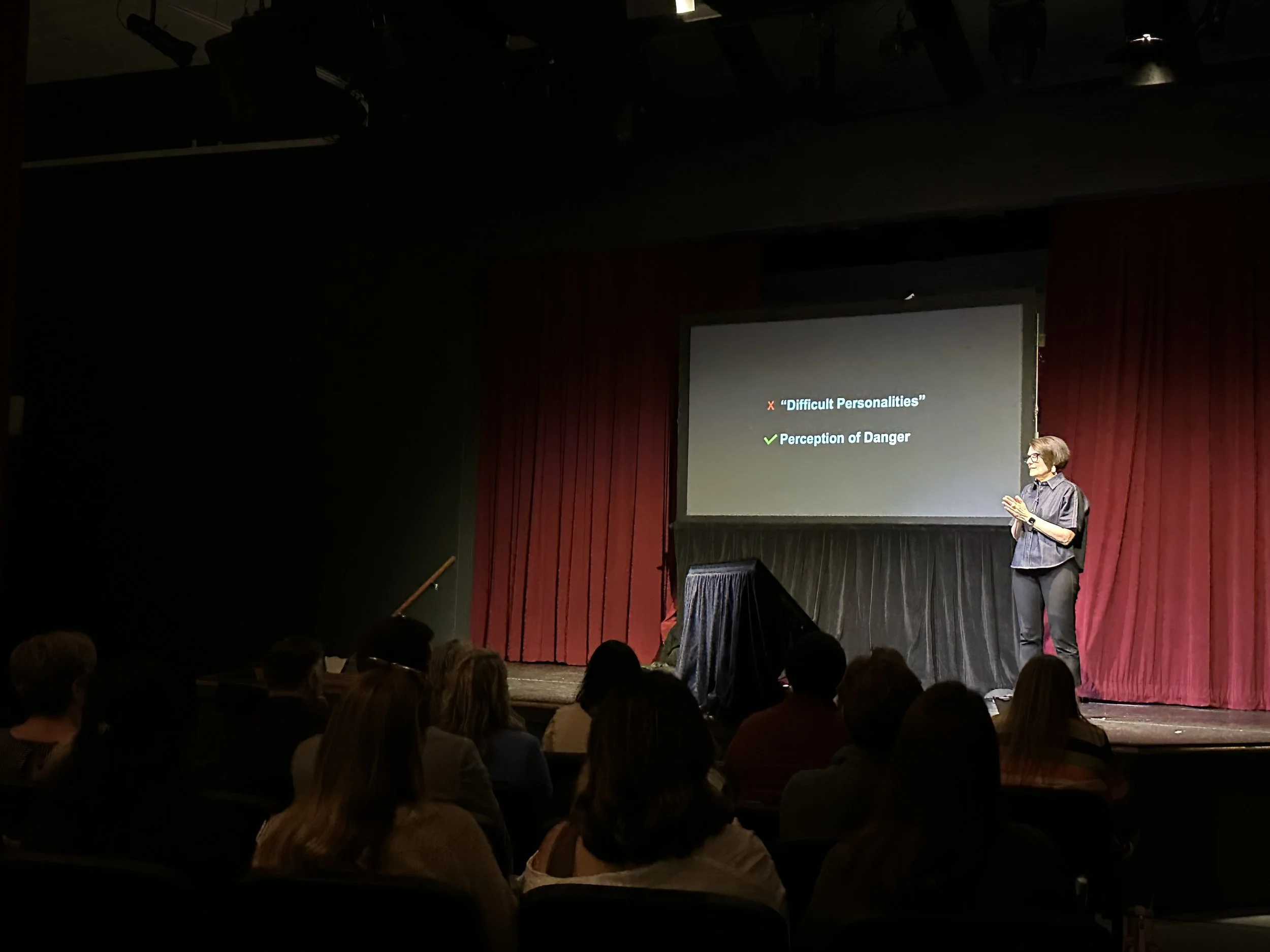
Last week I participated in a DisruptHR event that I can only describe as extreme public speaking.
Five minutes. Twenty slides advancing automatically every 15 seconds. A sold-out theater of HR leaders and business owners. One of the sponsors was a local axe-throwing venue, which somehow felt appropriate.
Earning a speaking slot was competitive. When someone asked why I wanted to do it, my answer was honest: I wanted the challenge of distilling ideas I normally teach over several hours into just five minutes, specifically ideas about conflict.
Lately I've been working with HR leaders in creative organizations who find themselves mediating workplace disputes. They're asked to step into emotionally charged or power-imbalanced situations, and they quickly discover that talking to each person separately rarely changes anything - and facilitating a real-time conversation between them requires a deeper set of skills.
That realization became the foundation for my presentation, Stop Outsourcing Conflict and "Enter the Danger."
I was seventh in a lineup of nine speakers. The emcee introduced me, I stepped onto the X taped to the stage, waved to the videographers, and the clock started.
I opened with a familiar scenario:
Someone walks into your office and says, "We need to do something about Alex! Nobody can work with him!"
"Have you tried talking to him?" you reply.
"Arrggh ...I can't even get him to answer my emails!!" comes the response.
It's a conversation many people leaders have experienced. Unfortunately, it's also a dead end.
We tend to think workplace conflict is caused by "difficult personalities" that need to be managed. But more often, it's driven by something deeper: the brain's perception of danger.
Our brains evolved to keep us alive by constantly scanning our environment for threats. Today, those threats are less likely to be predators and more likely to be social - having our competence questioned, our status diminished, or our sense of belonging threatened. The brain responds to those social threats much the same way it would a physical one, shifting resources away from creative problem-solving and toward self-protection.
That's why difficult conversations are so often avoided, or go badly.
By the time HR gets involved, people have often been operating in survival mode for days or even weeks. But HR’s first job isn't to solve the conflict; it's to lower the threat response so that both people can think clearly again.
Five minutes later, it was over.
The applause was gratifying, but so was another realization: my favorite part of this work isn't delivering a polished monologue. It's creating dialogue by shaping an idea, responding to questions, adjusting in real time, and helping people discover new insights.
Which, now that I think about it, is exactly what happens when you enter the danger.
If you’d like to explore ways for the people leaders in your organization to shift from survival mode to curiosity, and navigate conflict before collaboration and productivity suffer, I’m here for you.